
Last updated September 24, 2026
Free in-home measure and quote - PGT, CGI and CWS impact lines compared on your actual openings, style by style
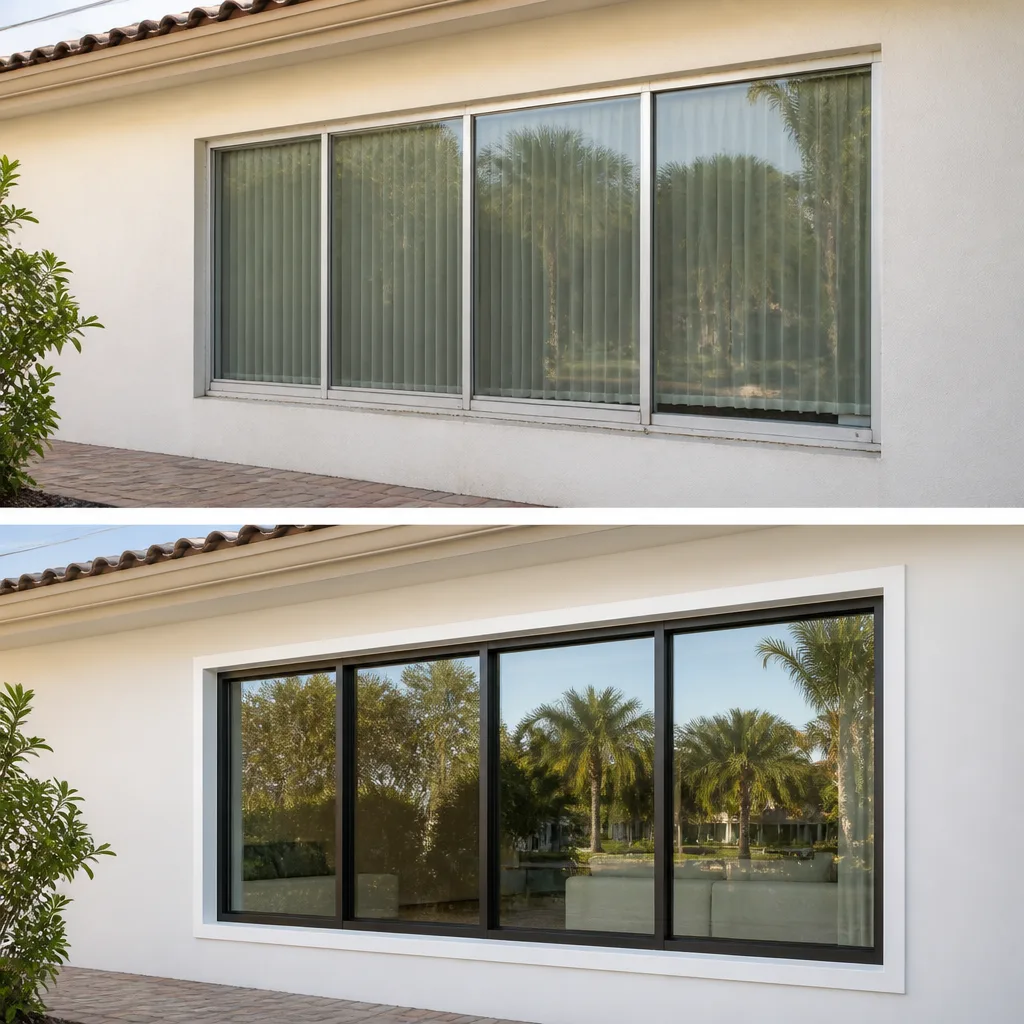
 Before
 After
After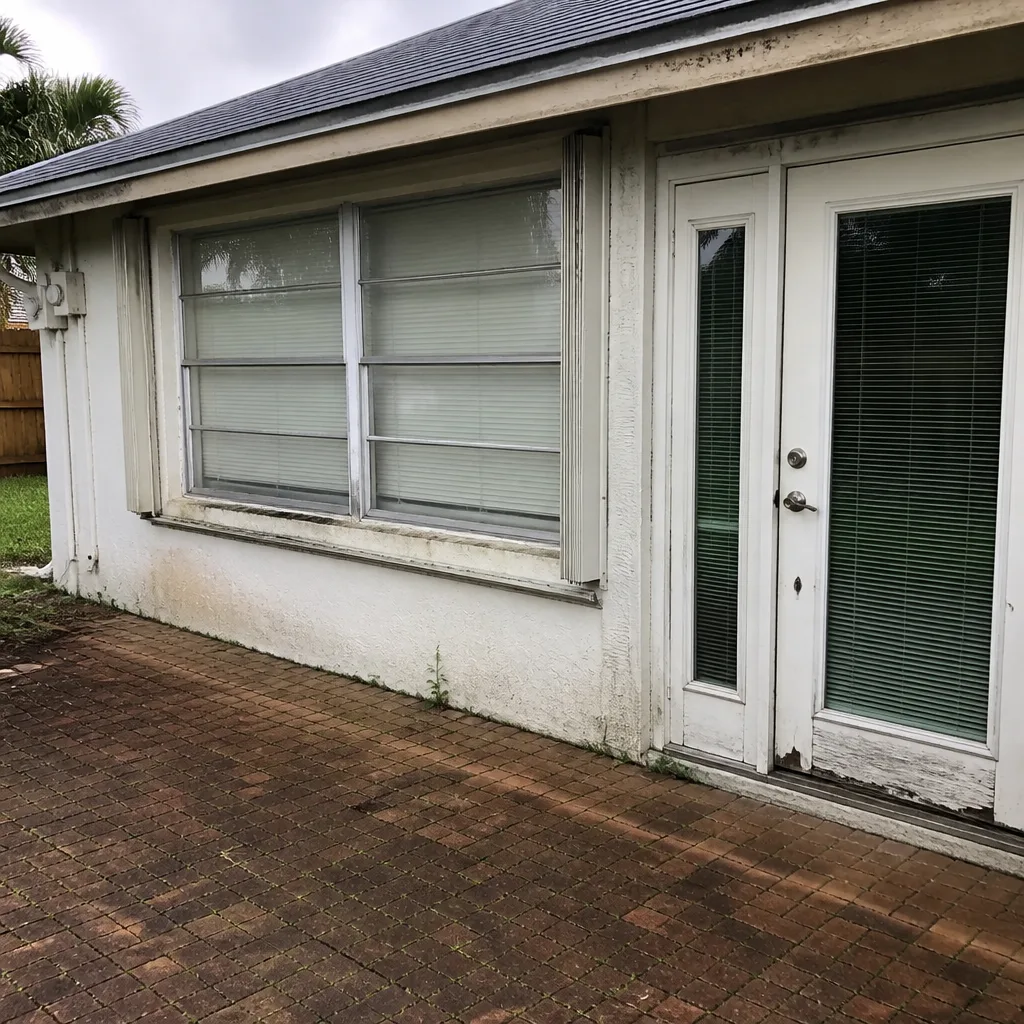 Before
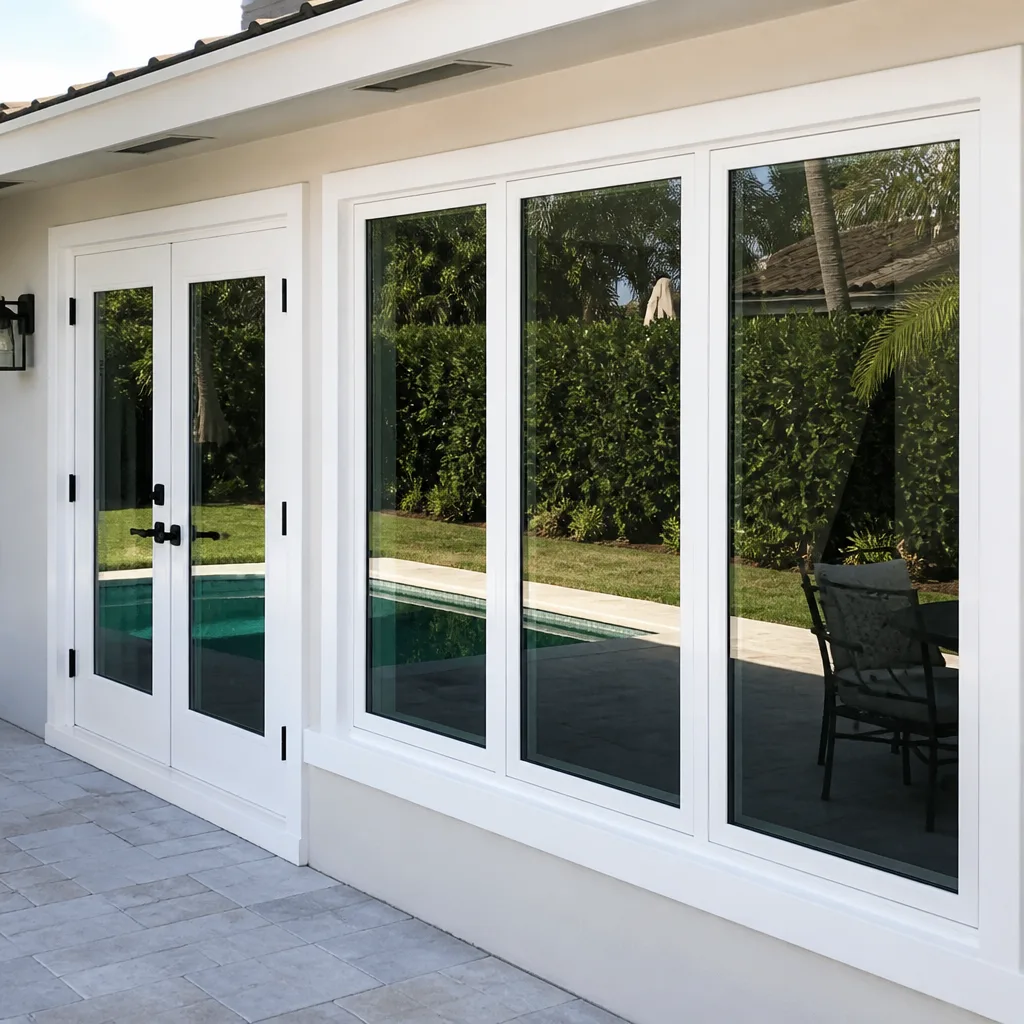 After
After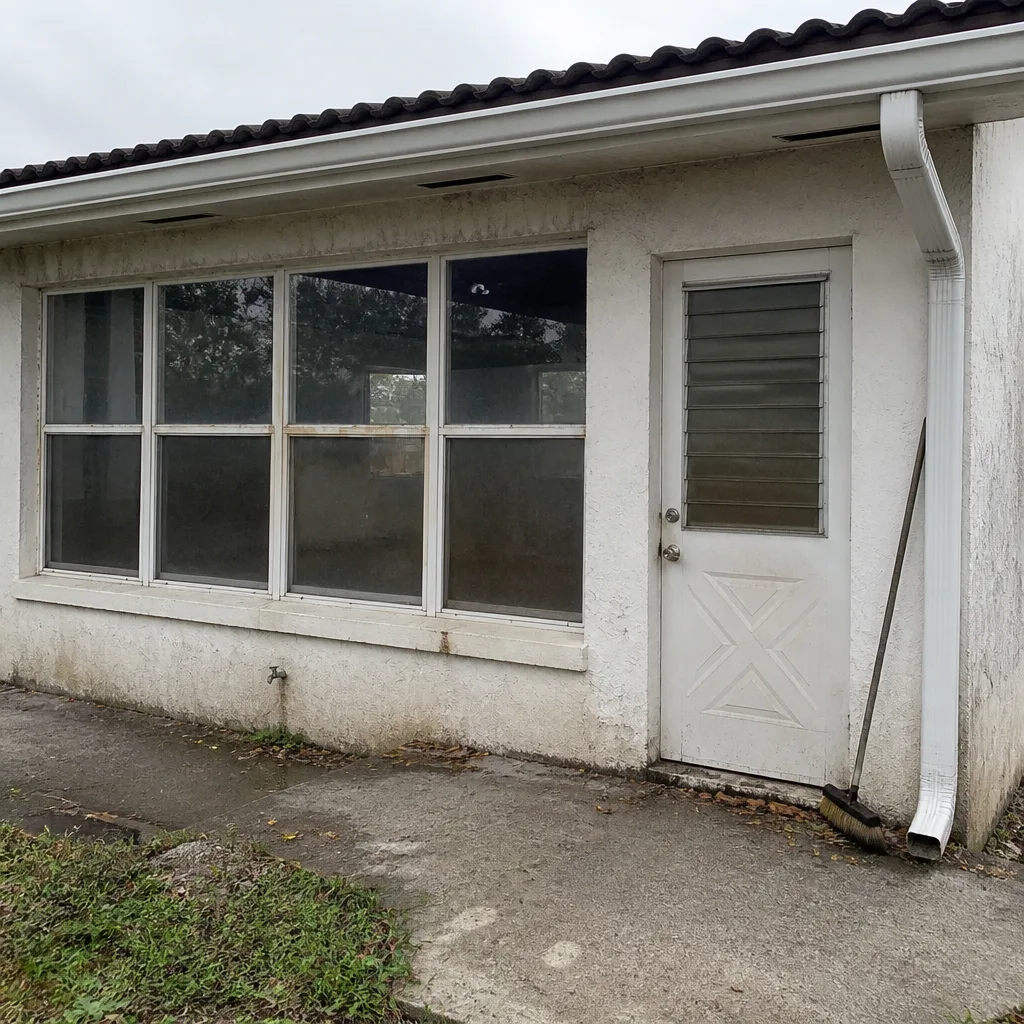 Before
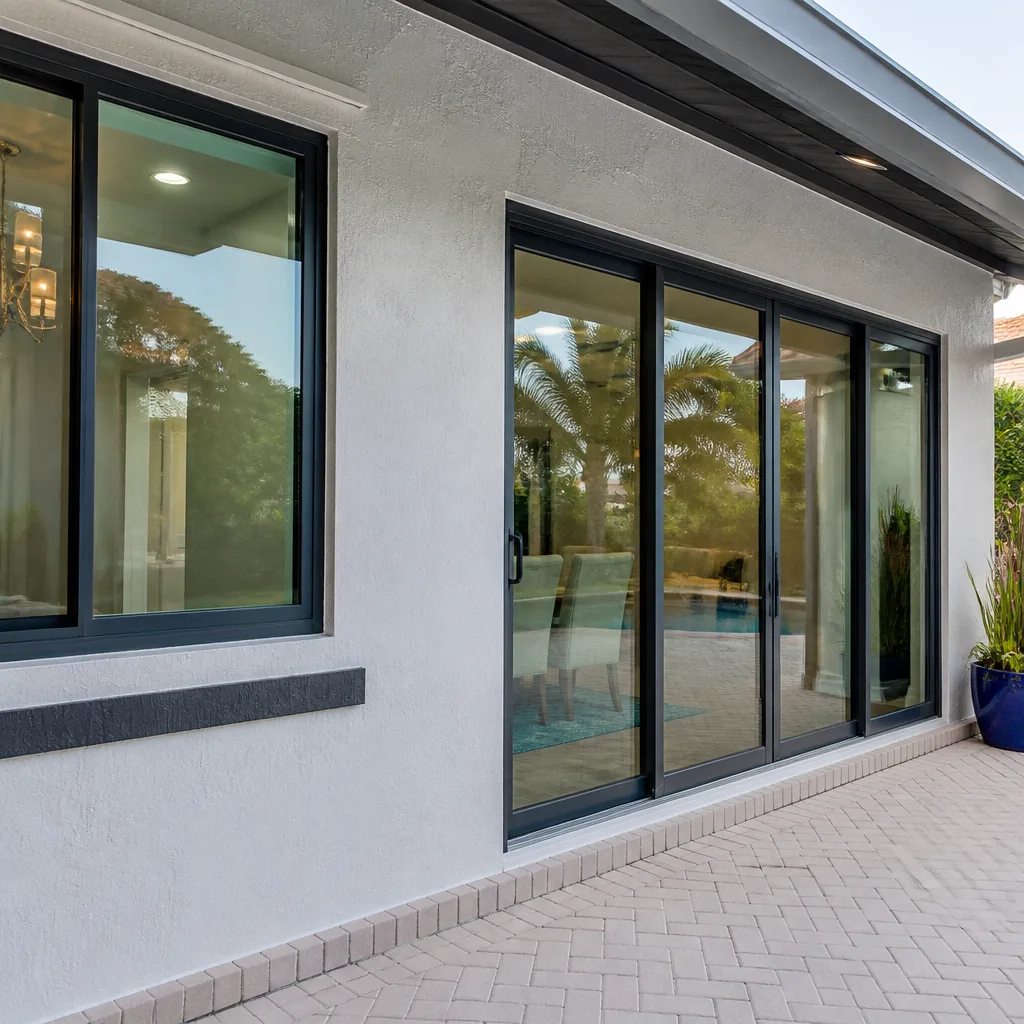 After
AfterWindows & Doors Warning Signs: A Boynton Beach Homeowner’s Reference Guide
Water staining on the interior drywall below a window is three different problems depending on where exactly it appears. At the sill, it usually indicates sill pan failure. At the jamb, it usually indicates flashing failure. At the head, it usually indicates lintel or rough-opening deflection. Each carries a different cost range and repair timeline in Boynton Beach’s permit system, and most warning-sign guides never teach homeowners how to tell them apart. This guide connects every visible symptom to its specific failure mechanism, assigns a documented urgency tier, and shows you how to photograph and document what you find so any contractor can quote accurately and any insurer can evaluate fairly. For additional help, see our How to Hire a Windows & Doors Contractor in Boynton Beach: A Step-by-Step Guide.
Quick Answer
The most critical window and door warning signs in Boynton Beach are: interior water stains positioned at specific locations (sill, jamb, or head) indicating distinct failure types; between-pane condensation signaling seal failure in insulated glass units; frame-to-rough-opening separation exceeding 1/8 inch; and salt-air corrosion on multipoint lock hardware or sill tracks. Cosmetic vinyl expansion from South Florida heat is normal and requires no action, but structural separation, active water intrusion, or hardware failure allowing latching compromise should be addressed within 30 days to prevent secondary damage.
Table of Contents
- The Interior Water Stain Map: Reading Location as Diagnosis
- Vinyl Frame Expansion vs. Structural Separation in South Florida Heat
- The Condensation Diagnostic: Three Types, Three Meanings
- Salt-Air Hardware Corrosion: Surface vs. Structural
- Glass Failure Signs: Impact, Stress, and Seal Compromise
- Door-Specific Warning Signs: Operation, Weatherseal, and Security
- Documenting Warning Signs for Contractors and Insurers
- The Urgency Tier System: When to Act
 Before
 After
AfterThe Interior Water Stain Map: Reading Location as Diagnosis
Most homeowners in Boynton Beach discover water intrusion only after the drywall has stained. The position of that stain is the single most useful diagnostic tool you have before any contractor arrives. We have documented thousands of openings since 2012, and the pattern holds across every neighborhood from Ocean Breeze to Chapel Hill.
Stain at the Sill: Sill Pan Failure
Water staining concentrated at the bottom of the window frame, often spreading outward in a fan pattern, typically means the sill pan has failed or was never properly integrated with the rough opening. In Boynton Beach, where afternoon thunderstorms drop significant water in short windows, a compromised sill pan allows water to pool at the rough opening base and wick into the wall cavity.
What to look for:
- Stain width exceeds the window frame width (indicates water spreading in the wall cavity, not just surface runoff)
- Paint bubbling or baseboard swelling directly below the window
- Musty odor in the wall cavity detectable near electrical outlets on the same stud bay
- Exterior evidence: damaged or missing end dams on the sill pan, or sealant failure at the sill-to-jamb transition
Repair scope and cost context: Sill pan replacement in Boynton Beach typically requires permit-triggered work if the rough opening is exposed, with costs ranging from $400 to $1,200 per opening depending on framing repair needs. Full window replacement with proper sill pan integration often runs $1,800 to $4,500 for standard vinyl or aluminum units in this market.
Stain at the Jamb: Flashing Failure
Vertical staining along the sides of the window frame indicates flashing tape or membrane failure at the jamb-to-rough-opening interface. In Boynton Beach’s coastal environment, salt-laden air accelerates adhesive degradation on flashing tapes, particularly on west-facing elevations that take the brunt of afternoon rain followed by rapid solar heating.
Key distinguishing feature: jamb stains rarely show the wide spreading pattern of sill pan failures. They tend to be narrow, vertical, and often asymmetric, worse on the windward side of the home.
Stain at the Head: Lintel or Rough-Opening Deflection
Staining at the top of the window frame is the most serious location and the most commonly misdiagnosed. It indicates either structural deflection of the lintel or header above the opening, or failure of the head flashing to manage water running down the wall plane. In Boynton Beach’s 1980s and 1990s construction stock, particularly in neighborhoods like Leisureville and the original Boynton Waters developments, undersized headers over wide window banks have sagged over decades, creating a pitch toward the interior that channels water inward.
The critical distinction: head-flashing failure alone usually produces staining directly at the frame head. Lintel deflection produces staining that may extend past the frame width, often with visible frame distortion (the window becomes trapezoidal, with the latch side binding).
Cost context: Head flashing repair runs $300 to $800 per opening. Lintel replacement or reinforcement is structural work, typically $2,000 to $6,000 depending on span and finish repair, and requires engineered drawings in Boynton Beach’s building department for openings over 6 feet.
Vinyl Frame Expansion vs. Structural Separation in South Florida Heat
South Florida’s heat creates a specific diagnostic challenge: vinyl window frames expand significantly in direct sun, and that expansion is normal, expected, and not a defect. But frame expansion can mask or mimic actual frame-to-rough-opening separation, which is a structural concern requiring prompt attention.
Normal Vinyl Expansion
Vinyl has a linear thermal expansion coefficient of approximately 4.5 x 10^-5 in/in-°F. For a 36-inch wide vinyl window frame, a 50°F temperature swing (morning low to afternoon surface temperature in direct Boynton Beach sun) produces approximately 0.081 inches of expansion. You will see this as:
- Tight sash operation in afternoon heat that loosens by evening
- Visible but uniform gap reduction between sash and frame on the sun-facing side
- Gap that returns to baseline after sunset, with no incremental widening over seasons
Structural Separation: The Critical Difference
Frame-to-rough-opening separation occurs when the fastening system fails, the rough opening degrades, or the installation was deficient. Unlike thermal expansion, this gap grows over time and does not reverse.
How to distinguish it:
- Measure the gap at the same time of day, weekly, for three weeks. Thermal expansion is repeatable; structural separation accumulates.
- Check for fastener pull-through. Open the sash and examine the frame interior. Structural separation often reveals screw heads that have pulled through the vinyl fin or flange, or shims that have compressed or shifted.
- Assess gap uniformity. Thermal expansion is relatively uniform across the frame width. Structural separation is often worse at one corner, creating a visible racking of the frame.
- Test operation across temperatures. A thermally expanded frame may operate stiffly but consistently. A separated frame may allow the sash to drop or rack, causing latch misalignment that worsens independently of temperature.
The threshold for action: any frame-to-rough-opening gap exceeding 1/8 inch that does not close with temperature change, or any gap that has grown measurably over a 30-day period. In Boynton Beach’s hurricane code environment, this separation compromises the pressure rating of the opening and can void impact certification.
Replacement context: A properly installed replacement window in Boynton Beach, specified to the opening’s actual dimensions under the Haven Standard, eliminates this failure mode. Not sure whether to DIY or hire out? Read DIY vs Professional Windows & Doors: The Boynton Beach Homeowner’s Decision Guide. Our measured survey documents the rough opening condition before any product is specified, and the written quote reflects what we found, not a catalog price.
The Condensation Diagnostic: Three Types, Three Meanings
Condensation on windows confuses more Boynton Beach homeowners than any other symptom because three distinct condensation types indicate three entirely different conditions. Misreading them leads to unnecessary replacement or missed seal failure.
Exterior Condensation: Dew on the Outside
Water droplets on the exterior glass surface, typically in early morning during high-humidity periods, indicate that the glass is performing well. The exterior surface has cooled below the dew point of the outside air, which happens when the window’s thermal performance is good enough to prevent that heat from reaching the interior. This is most common on high-performance low-E coatings in Boynton Beach’s humid mornings, particularly on north-facing elevations that cool overnight.
Action required: None. Wipe it off if it bothers you, or wait for solar gain to clear it.
Interior Condensation: Room-Side Moisture
Water droplets or fog on the interior glass surface indicate that the interior surface temperature has fallen below the room’s dew point. In Boynton Beach, this typically occurs in:
- Overcooled rooms (interior set below 72°F in summer with exterior humidity above 85%)
- Rooms with high latent loads (kitchens, bathrooms, indoor plant concentrations) without adequate ventilation
- Windows with failed or missing weatherstripping, allowing conditioned air to wash the interior glass
Interior condensation is a building science problem, not a window defect, unless it correlates with weatherstripping failure. The moisture risks are real, mold on window frames and sill plates, but the solution is usually ventilation or setpoint adjustment, not window replacement.
Between-Pane Condensation: Seal Failure
Fog or droplets between the glass panes of an insulated glass unit (IGU) indicates seal failure and is the only condensation type that mandates window replacement. The desiccant in the spacer bar has saturated, and the unit has lost its insulating gas fill. In Boynton Beach’s coastal humidity, this failure accelerates once it starts, the breached seal allows continuous moisture ingress, and the unit’s U-factor degrades measurably.
How to confirm: The fog does not wipe off from either side. It may clear temporarily with temperature swings but returns predictably. In advanced failure, you will see mineral staining or etching at the glass interior, permanent evidence that the unit is breached.
Replacement note: IGU replacement (glass-only) is possible for some window systems but requires matching the spacer bar, gas fill, and low-E coating to maintain performance. In Boynton Beach’s HVHZ (High-Velocity Hurricane Zone), glass replacement also requires product approval documentation. Full sash or window replacement is often more cost-effective, particularly for units over 10 years old. At Window Replacement in Boynton Beach, we specify replacement scope based on what the opening requires, not what is in stock.
Salt-Air Hardware Corrosion: Surface vs. Structural

Boynton Beach’s location between the Atlantic and the Intracoastal Waterway creates a salt-air environment that attacks window and door hardware differently depending on exposure, material specification, and maintenance history. Understanding the difference between surface corrosion and structural corrosion prevents premature replacement and identifies genuine security risks.
Surface Corrosion: Cosmetic, Manageable
Surface corrosion appears as discoloration, light pitting, or white powdery deposits on hardware finishes. It does not compromise mechanical function. Common locations:
- Exterior escutcheon plates on east-facing doors, within 1 mile of the ocean
- Hinge barrels on casement windows with stainless steel pins but zinc-alloy barrels
- Sill track surfaces on sliding doors, where condensation wicks salt deposits
Management: Clean with a mild detergent solution, dry thoroughly, and apply a silicone-based lubricant to moving surfaces. Avoid petroleum-based lubricants that attract particulates.
Structural Corrosion: Functional Compromise
Structural corrosion has progressed past the finish into the base metal, altering dimensions, reducing cross-section, or seizing moving parts. Critical inspection points:
- Multipoint lock bolts and keeps. Measure bolt throw with the door open. If corrosion has reduced the engaged depth below 3/4 inch on a standard multipoint, the lock no longer meets the design pressure rating of the door.
- Hinge knuckles and pins. Lift-test the door: with the door closed, apply upward pressure at the lock stile. Movement exceeding 1/16 inch at the top hinge indicates pin wear or knuckle elongation from corrosion.
- Sill track rollers. Corroded rollers flat-spot or seize, increasing operating force. A sliding door that requires more than 10 pounds of force to initiate movement has compromised hardware per ADA guidelines and is at risk of panel derailment in wind load.
- Corrosion at fastener interfaces. Remove one visible fastener from non-structural hardware (do not remove structural fasteners). If the threads show active corrosion or the fastener head is degraded, the hardware attachment may be compromised.
Product specification matters: PGT and CGI hardware lines specify 316-grade stainless steel for coastal applications, with proprietary coatings for additional protection. Therma-Tru multipoint locks use zinc-nickel plating with salt-spray ratings appropriate to this environment. When we specify hardware at Door Installation in Boynton Beach, the coastal exposure of the specific elevation drives the specification, not the base catalog offering.
Glass Failure Signs: Impact, Stress, and Seal Compromise
Glass failures in Boynton Beach carry particular urgency because of the HVHZ requirement: any replacement glass must carry Florida Product Approval for the specific design pressure of the opening. Installing non-approved glass, even temporarily, can void insurance coverage and create code violations.
Impact-Related Damage
Impact-rated glass is designed to crack in a controlled pattern while remaining in the frame under wind-borne debris load. After any impact event:
- Document the damage pattern: spiderweb cracking with an intact interlayer (typical of laminated impact glass) is a successful performance, not a failure
- Check for frame distortion: if the impact caused frame racking, the opening’s pressure rating may be compromised even if the glass is intact
- Inspect the glazing bead or stop: displacement indicates that the glass lite moved in the frame, which can damage the edge seal of the IGU
Replacement requirement: Any impact-rated glass with through-penetration of the interlayer, or any glass where the interlayer has delaminated from the lite edge, requires replacement. Temporary boarding is acceptable for security but does not restore the pressure rating.
Thermal Stress Cracks
Thermal stress cracking appears as a single crack running from the glass edge, often perpendicular to the longest edge, without impact point. In Boynton Beach, this occurs when:
- Dark exterior shading (shutters, awnings, deep overhangs) creates a sharp temperature gradient across the lite
- Interior shading (closed blinds with reflective backing) traps heat at the glass surface
- Glass is installed without adequate edge clearance, constraining expansion
The crack pattern is diagnostic: thermal stress produces a clean, single crack. Impact produces a radial or spider pattern. Misidentification leads to incorrect insurance claims and replacement with the same risk factor uncorrected.
Edge Seal Degradation
Before between-pane condensation appears, edge seal degradation shows as:
- Visible gap or displacement of the spacer bar at the glass perimeter
- Mirror-like deposit (silica bloom) at the lite edge, visible when viewed at an angle
- Gradual increase in visible condensation events, starting with brief morning fog that clears quickly
Early detection allows planned replacement during favorable weather windows. Delayed replacement risks interior frame damage from chronic moisture exposure.
Door-Specific Warning Signs: Operation, Weatherseal, and Security
Doors experience different failure modes than windows due to higher traffic loads, larger panel mass, and the security requirement of positive latching. These are the specific warning signs we document most frequently in Boynton Beach homes.
Operation Degradation
A door that has gradually become harder to operate is not “settling.” It is indicating a specific, identifiable problem:
- Binding at the top or bottom only: Hinge-side frame has racked or fasteners have loosened, allowing the door to sag. Check hinge screw length: short screws (under 2-1/2 inches) in the top hinge often pull from the framing.
- Binding at the lock side only: Strike plate has shifted or the multipoint bolts are misaligned with keeps. This is a security concern: a misaligned multipoint may show engaged at the handle but leave upper and lower bolts unengaged.
- Resistance throughout the swing: Frame is out of square, often from structural settlement or improper installation shim compression.
Weatherseal Failure
Weatherseal compression set (permanent deformation from long-term compression) is invisible but detectable:
- Close the door on a sheet of paper at the lock stile, header, and threshold. Sliding resistance indicates adequate compression. Free movement indicates seal failure.
- Inspect the seal profile: intact seals have uniform cross-section. Compression-set seals show permanent flattening, particularly at the threshold where foot traffic accelerates degradation.
- Check for light passage: in a darkened interior, have an assistant shine a flashlight at the perimeter. Visible light at any point indicates a breach.
In Boynton Beach, weatherseal failure has immediate energy consequences: the cooling load increase from a failed door seal can exceed 15% of the opening’s design load, measurable on utility bills within one billing cycle.
Threshold and Sill Track Degradation
Sliding and French door thresholds in Boynton Beach suffer specific coastal damage:
- Aluminum threshold extrusions corrode at the fastener points and at any scratch that breaches the anodized layer
- Composite thresholds swell and delaminate if water is trapped in the sub-threshold pan
- Sill tracks accumulate sand and salt deposits that accelerate roller wear and create operating resistance
Threshold replacement is often deferred but has cascading effects: degraded thresholds allow water intrusion to the subfloor, and the repair scope expands from a $300 threshold replacement to $2,000+ of subfloor and finish repair.
For door replacement specified to actual opening conditions, Door Installation in Boynton Beach documents the threshold condition in the measured survey and specifies appropriate materials for the exposure.
Documenting Warning Signs for Contractors and Insurers
The documentation you create before calling a contractor determines the accuracy of the quote you receive and the success of any insurance claim. We require this documentation for every Sightline Windows & Doors Boynton Beach home engagement, and the format we describe here is what we need from homeowners who have not yet engaged us.
Photographic Documentation Protocol
- Establish context. One photograph from 10 feet showing the full opening in its wall plane, with adjacent openings visible for comparison. Include a recognizable reference (corner of house, landscaping feature) for location identification.
- Capture the symptom. Close-up at 90 degrees to the affected surface, with a ruler or coin for scale. For stains, include the stain boundary and adjacent unaffected surface for color reference.
- Document progression. If the symptom is dynamic (growing stain, increasing gap), photograph from the same position with the same reference objects weekly. Date-stamp each image.
- Record environmental conditions. Note time of day, recent weather, interior temperature and humidity if available. In Boynton Beach, afternoon thunderstorms can produce transient symptoms that are not representative of baseline conditions.
- Photograph identification plates. For windows and doors, the manufacturer label (usually in the frame header or on the hinge stile) contains the product approval number, manufacturing date, and design pressure rating. This determines whether replacement products must meet current or grandfathered standards.
Written Record Format
Create a simple log with these columns:
- Date and time observed
- Specific location (room, elevation, opening identifier if known)
- Symptom description, using the vocabulary from this guide
- Environmental conditions
- Photograph file names cross-referenced
- Any changes from previous observation
This log becomes the primary document for contractor quotes and insurance claims, and you can find more guides & resources on our blog to help through every step. It eliminates the “it wasn’t that bad when I looked” disputes that arise from memory-based descriptions.
Insurance-Specific Documentation
For claims related to sudden damage (impact, storm, water intrusion from confirmed failure):
- Photograph all damage before any temporary repair or mitigation
- Retain all failed components (hardware, glass fragments, seal samples) if safe to do so
- Document the chain of events with specific times: when you first observed, when you first documented, when temporary measures were taken
- Obtain written scope from any emergency contractor before work begins, even for temporary measures
Insurers in Florida’s coastal markets are increasingly requiring pre-damage documentation of opening condition. Homeowners with dated photographs of intact windows and doors, particularly impact-rated units with visible product approval labels, experience fewer coverage disputes.
The Urgency Tier System: When to Act

Not every warning sign demands immediate replacement. This tier system, developed from our documentation of 18,000+ openings, assigns action timeframes based on failure progression risk.
Tier 1: Monitor and Plan (90-Day Window)
- Cosmetic vinyl expansion that closes with temperature change
- Surface hardware corrosion with full mechanical function
- Exterior condensation only
- Weatherseal compression set without air leakage verification
Action: Document, schedule professional evaluation during routine maintenance window, budget for eventual replacement.
Tier 2: Schedule Professional Evaluation (30-Day Window)
- Interior condensation with confirmed ventilation deficiency
- Door operation degradation without security compromise
- Threshold corrosion without subfloor exposure
- Early edge seal degradation (mirror bloom, brief intermittent fog)
Action: Contact a qualified contractor for measured survey and written scope. In Boynton Beach, this allows scheduling during favorable weather and permit processing time.
Tier 3: Address Within 7 Days
- Between-pane condensation (active seal failure)
- Frame-to-rough-opening separation exceeding 1/8 inch
- Multipoint lock misalignment with bolt engagement compromise
- Active water intrusion with visible staining progression
- Impact-rated glass with interlayer breach
Action: Secure temporary measures if needed (boarding, interior water management), engage contractor for immediate evaluation. These conditions risk secondary damage or security compromise.
Tier 4: Emergency Response (Same Day)
- Glass failure with opening exposure (security, weather, or safety risk)
- Structural frame separation allowing panel detachment risk
- Water intrusion with electrical component exposure
- Post-storm damage with compromised pressure rating before next weather event
Action: Emergency boarding or securing, then professional evaluation. In Boynton Beach’s hurricane season, this tier requires documentation for potential named-storm claims.
Common Mistakes to Avoid
- Mistaking thermal expansion for structural failure. Boynton Beach homeowners often request emergency service for afternoon sash binding that resolves by evening. Measure at consistent times before calling.
- Applying interior caulk to water stains. Caulking the interior frame perimeter traps water in the wall cavity and conceals the true intrusion point. The repair belongs at the exterior flashing or sill pan.
- Ignoring manufacturer-specific product approval requirements. Not all impact-rated glass is approved for all Boynton Beach wind zones. Verify the product approval number matches your location’s requirements before accepting any replacement quote.
- Replacing windows for interior condensation. We evaluate many openings where the correct solution is a dehumidifier or ventilation adjustment, not $4,000 in unnecessary window replacement.
- Accepting verbal scope without written documentation. Haven Clause 1 exists because we have repaired too many jobs where the previous contractor’s “quote” was a phone number and a handshake. The written price before any work starts protects both parties.
- Delaying documentation until after temporary repairs. Insurers and subsequent contractors need to see the original damage state. Photograph first, then mitigate.
- Assuming all corrosion is merely cosmetic. Salt-air structural corrosion on multipoint locks is invisible until tested. Operate the full multipoint mechanism monthly and test bolt throw engagement.
When to Call a Professional
Call a qualified window and door contractor when: water stains appear at any location and grow over two consecutive observations; between-pane condensation is visible; frame separation exceeds 1/8 inch or progresses over 30 days; door operation requires increasing force or shows latch misalignment; or hardware corrosion is accompanied by mechanical function change. In Boynton Beach’s coastal environment, these symptoms rarely self-resolve and typically accelerate once established.
Sightline Windows & Doors Boynton Beach offers free estimates in Boynton Beach. Every engagement begins with a measured survey you keep, and the written quote cannot differ from that document. Call (561) 421-3844 to schedule your evaluation. We also provide free second opinions on any written estimate from another contractor.
Frequently Asked Questions
Window replacement for seal failure in Boynton Beach typically ranges from $1,800 to $4,500 per opening for standard vinyl or aluminum units, depending on size, impact rating requirement, and frame condition. IGU-only replacement runs $400 to $900 but requires matching the existing spacer, gas fill, and low-E coating, and may not be available for all product generations. Call (561) 421-3844 for an exact quote based on your specific opening, estimates are free.
No. Haven Clause 1 of the Haven Standard states that the measurement and the quote are the same document. Our measured survey documents the rough opening condition before quoting, and the written price is fixed. If we missed something in our survey, we absorb that cost. This has been our practice since 2012.
Yes. All replacement work that modifies the rough opening or changes the pressure rating requires a permit in Boynton Beach. We pull permits, schedule inspections, and provide the passed inspection documentation as part of our standard scope. The permit status is included in your documented photo record.
Standard replacement of one to four openings typically requires one to two days of installation after permit approval and product delivery. In Boynton Beach, permit processing runs 5 to 10 business days for standard replacements, longer if engineered drawings are required for structural modifications. We schedule installation only after product is in hand and permit is approved, avoiding the “measure and wait” gap common in this market.
Impact-rated glass needs replacement if the interlayer is breached (visible hole or tear), if the interlayer has delaminated from the lite edge, or if frame distortion has compromised the opening’s pressure rating. Spiderweb cracking with intact interlayer is successful performance and does not require replacement unless the pattern obstructs vision and cannot be tolerated. We document the specific damage pattern and provide the product approval verification for your insurance claim. Call (561) 421-3844 for post-storm evaluation.
Glass-only replacement is possible when the frame is sound, the sash is serviceable, and the IGU specification is available from the manufacturer. In Boynton Beach, glass replacement requires Florida Product Approval matching for the specific opening’s design pressure, which may not be available for discontinued product lines or units over 15 years old. We evaluate frame condition, hardware function, and specification availability before recommending scope. Often, full sash or window replacement is more cost-effective when frame degradation or hardware obsolescence is present.
The Bottom Line
Warning signs are data, not drama. The position of a water stain, the temperature-dependence of a gap, the location of condensation, and the pattern of corrosion each tell a specific story about what has failed and how quickly it is progressing. Boynton Beach’s coastal environment accelerates some failures and creates diagnostic confusion in others, but the underlying mechanics are consistent. Document what you observe, distinguish cosmetic from structural conditions using the criteria in this guide, and engage a contractor who provides written scope before work begins. The measured survey, the fixed price, and the documented record are your protection against both unnecessary replacement and deferred maintenance that becomes secondary damage.
Written by Sonia Raman, Owner at Sightline Windows & Doors Boynton Beach, serving Boynton Beach since 2012.