
Free in-home measure and quote - PGT, CGI and CWS impact lines compared on your actual openings, style by style
 Before
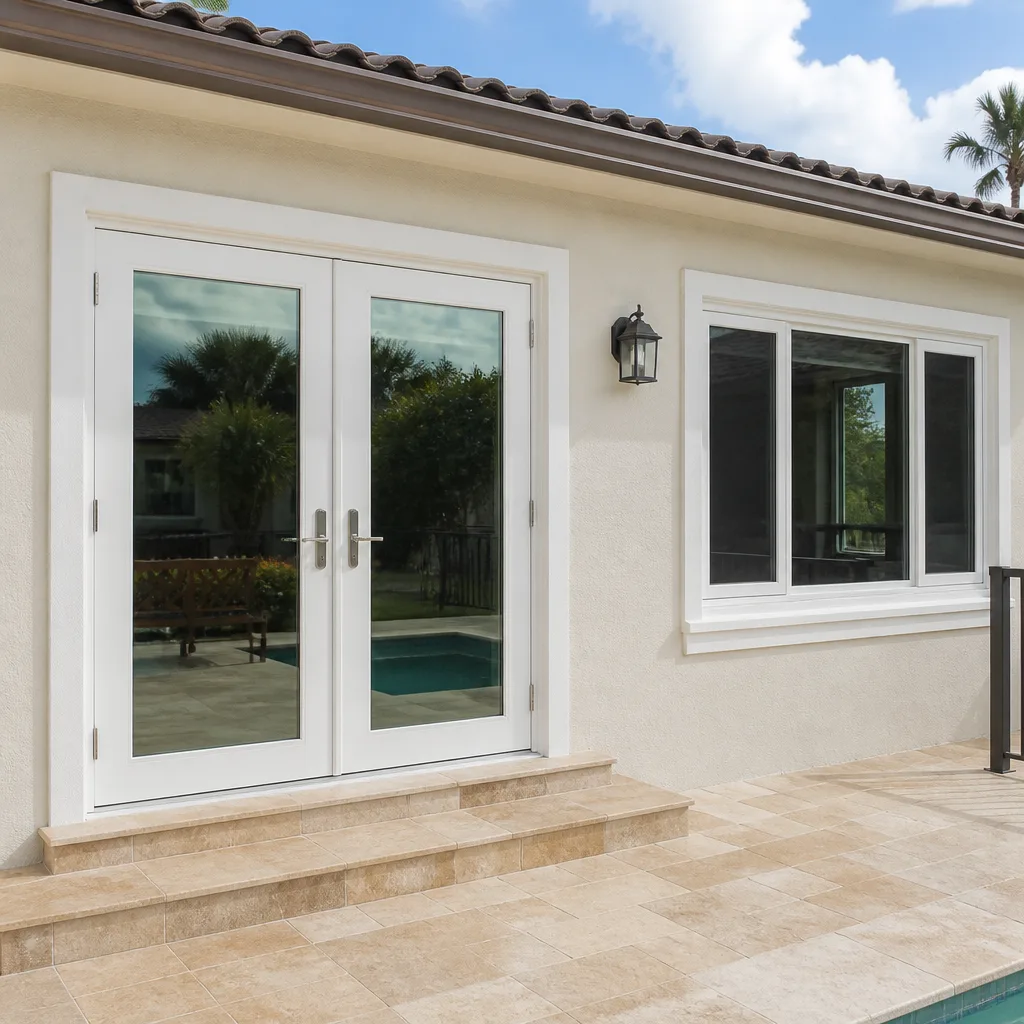 After
After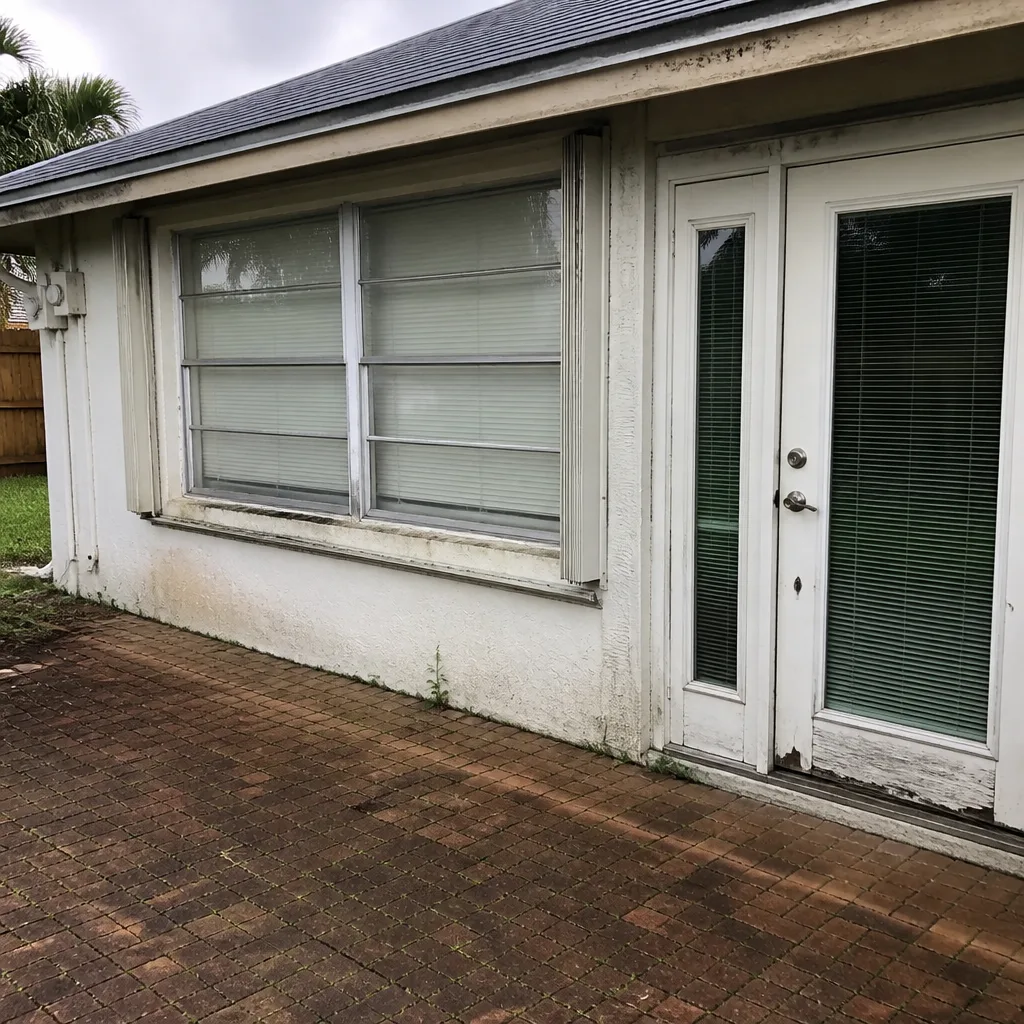 Before
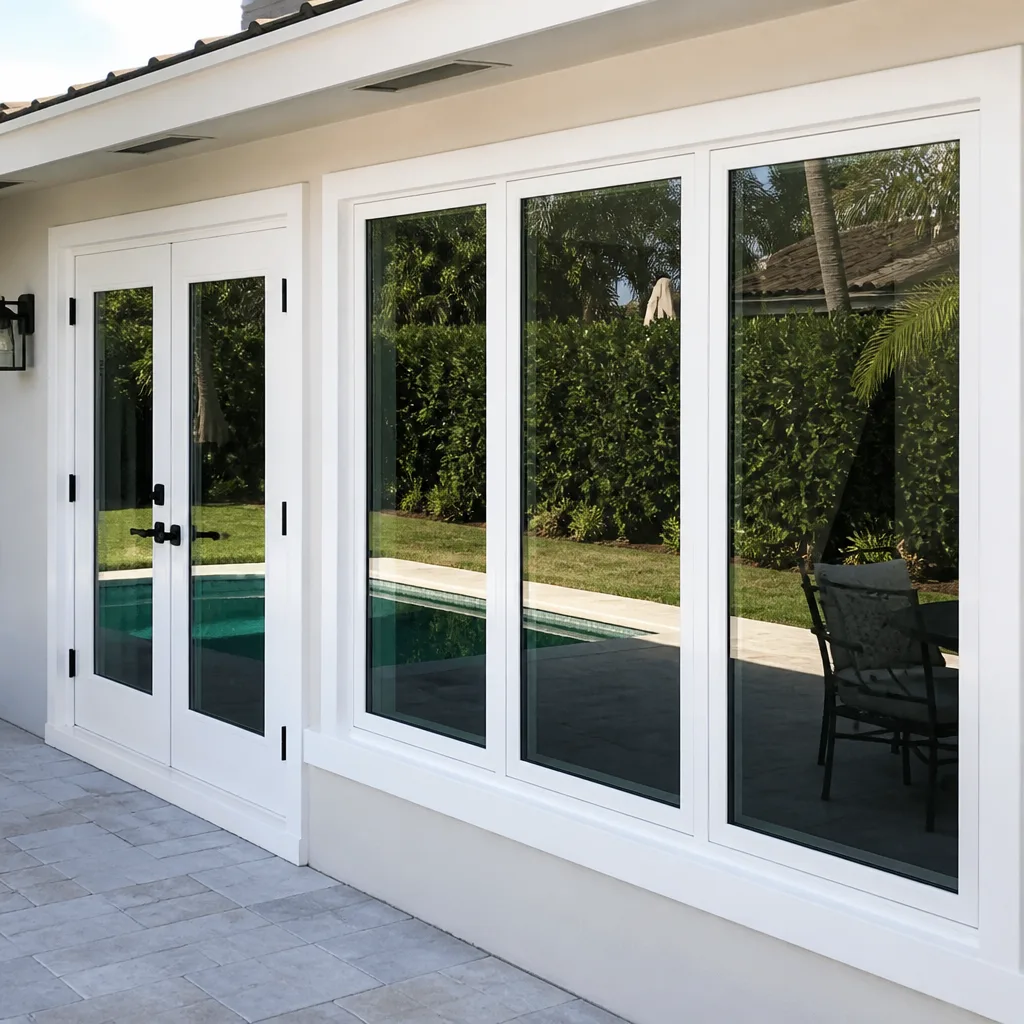 After
After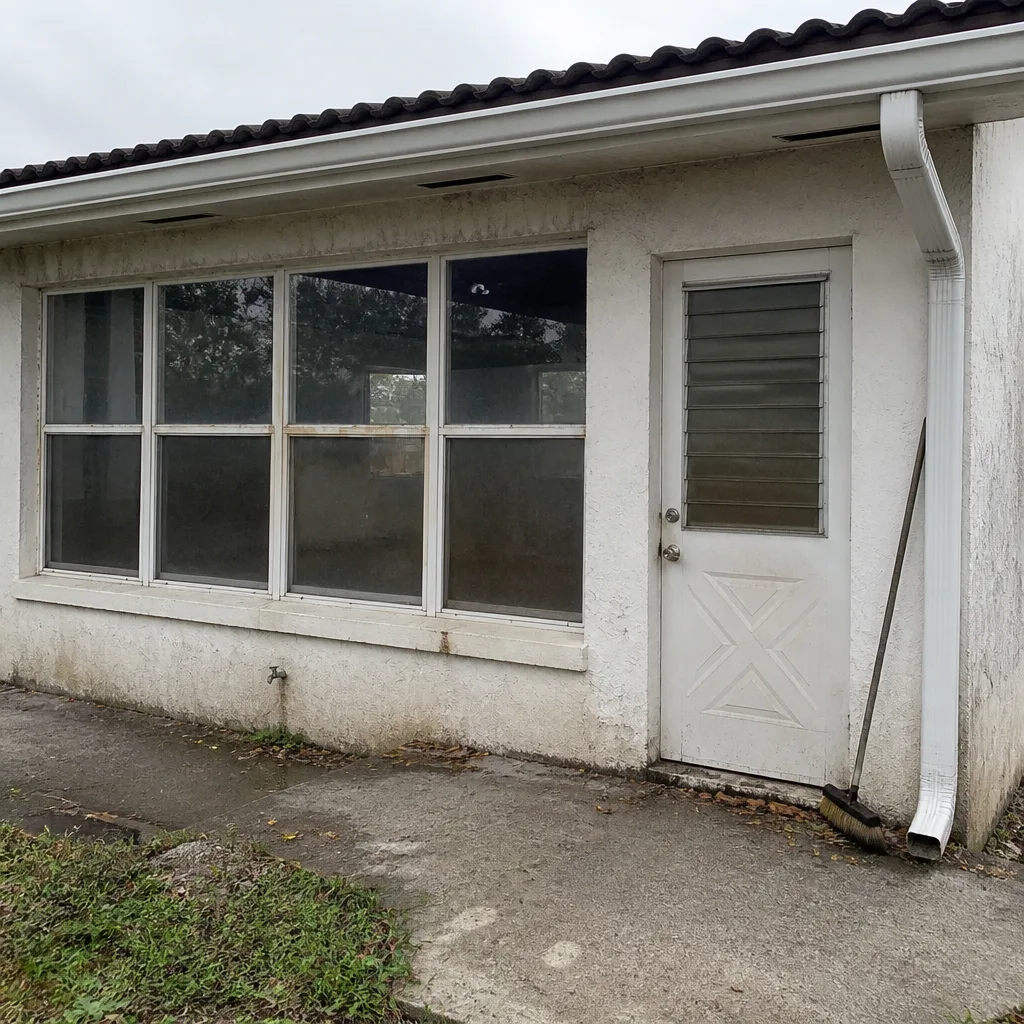 Before
 After
AfterHow Much Does Glass Railing Installation Cost in Boynton Beach?
Glass railing installation in Boynton Beach, FL typically runs $150 to $400 per linear foot installed, with most residential projects landing between $3,500 and $14,000 total depending on system type, glass spec, and site conditions. Frameless systems with tempered or laminated impact glass sit at the higher end of that range – framed and semi-frameless systems cost less upfront but carry their own trade-offs in coastal durability. At Sightline Windows & Doors, every price is written before a tool is lifted, so the number on this page is the same number you’ll see on your measured survey.
Glass Railing Installation Cost Breakdown (2026)
Glass railing pricing in Boynton Beach has a few distinct tiers, driven mostly by the mounting system, glass type, and whether the structure requires new post footings or blocking. Here’s how those tiers break down for the local market in 2026:
| System Type | Cost Per Linear Foot (Installed) | Typical Project Total |
|---|---|---|
| Framed aluminum channel system | $150 – $210 | $3,500 – $6,500 |
| Semi-frameless post-and-panel | $190 – $265 | $5,000 – $9,000 |
| Frameless standoff/spigot system | $260 – $340 | $7,500 – $12,500 |
| Frameless base-shoe channel (premium) | $310 – $400 | $9,000 – $14,000 |
| Custom curved or angled panels | $380 – $500+ | $11,000 – $18,000+ |
These ranges reflect the Boynton Beach market specifically – labor costs here run slightly higher than inland Palm Beach County markets because the proximity to the Intracoastal and the Atlantic drives demand for marine-grade hardware and corrosion-resistant coatings on all exposed aluminum and stainless components. A frameless spigot system quoted in Wellington at $270 per linear foot may well cost $295 to $315 in a waterfront property east of Federal Highway, simply because the hardware and finishing spec changes.
Glass itself is usually the single largest line item. Standard 3/8-inch tempered glass is code-minimum for most residential guardrail applications. Many Boynton Beach homeowners on or near the water upgrade to 1/2-inch tempered or laminated safety glass, which holds together on breakage – an important consideration on elevated decks and second-story balconies where a broken panel is a falling hazard. That upgrade typically adds $18 to $35 per square foot to the glass cost alone.
Labor in the Boynton Beach area runs approximately $60 to $110 per linear foot of the installed cost, depending on access complexity, substrate type (concrete slab, wood decking, tile), and whether the installer needs to core-drill new anchor points or work from existing blocking. Second-story balconies and pool deck installations near the Intracoastal – think properties in Quantum Lakes, Hunters Run, or the sections of Leisureville that back up to canals – almost always require additional substrate reinforcement work that gets itemized separately in a proper written scope.
Permit and Inspection Costs in Boynton Beach
Boynton Beach building code requires a permit for any guardrail installation where the drop exceeds 30 inches, which covers the vast majority of balcony, staircase, and elevated-deck glass railing projects. The City of Boynton Beach permit fee for structural railing work generally falls in the $150 to $425 range depending on declared project value – your installer should pull this permit, not skip it. An unpermitted railing that fails inspection during a home sale can require full removal and reinstallation at the seller’s expense, which we’ve seen cost Boynton Beach homeowners between $4,000 and $9,000 at the worst possible moment. Sightline handles permit pulling as part of the written scope; it’s not an afterthought.
What Affects Glass Railing Installation Pricing in Boynton Beach
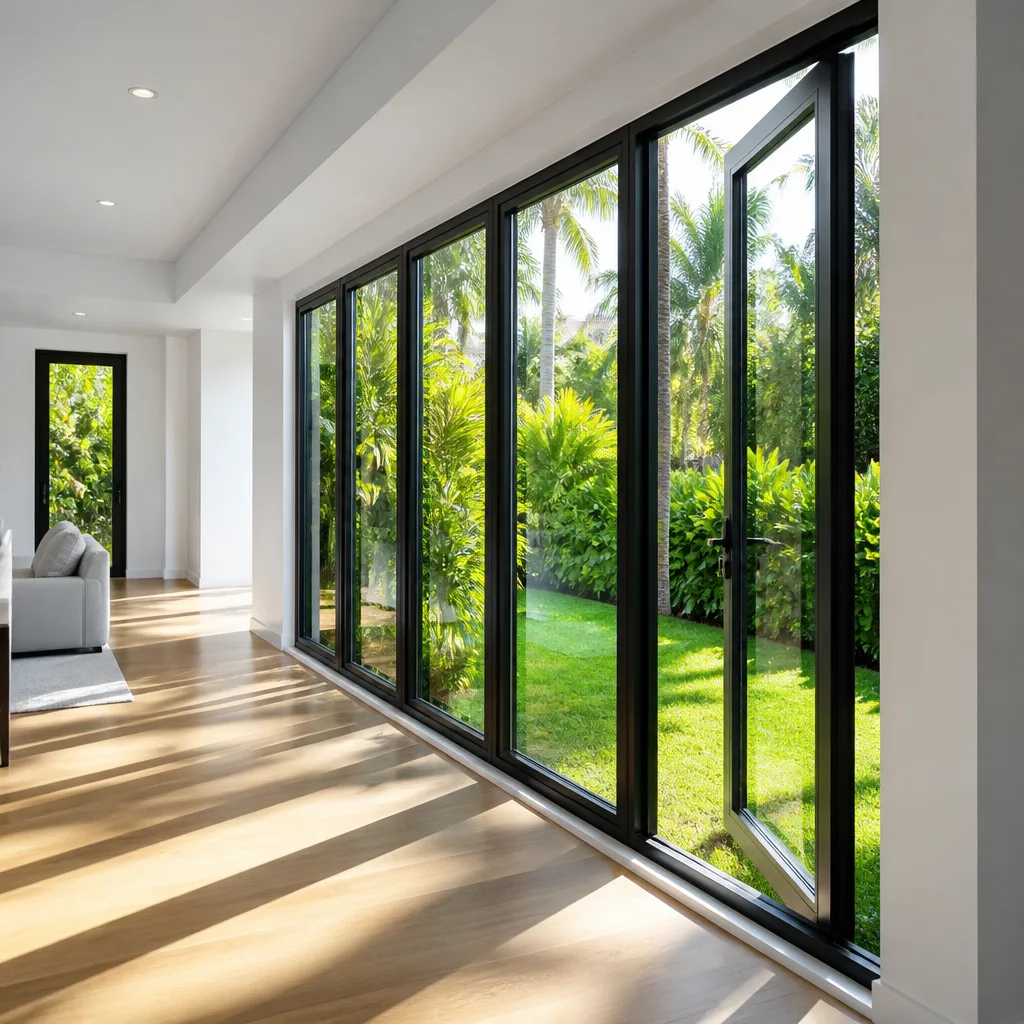
- Mounting system and frame type: The biggest single variable. A base-shoe channel system – where the glass panel sits in a continuous aluminum channel anchored to the deck – costs more in materials and labor than a framed system, but it eliminates individual post penetrations and gives the clean sightline most Boynton Beach homeowners are buying the system for. Spigot and standoff systems fall in between. The system choice isn’t just aesthetic; it affects load rating, code compliance, and long-term coastal durability.
- Glass thickness and specification: Code minimum is 3/8-inch tempered. A step to 1/2-inch tempered adds meaningful cost and meaningful safety margin. Laminated glass – two glass lites bonded with a PVB or SGP interlayer – doesn’t fall apart when broken, which matters on any elevated application. For properties close to the Intracoastal or the beach, some Boynton Beach homeowners spec laminated panels specifically for impact resistance; this isn’t a structural impact-rating equivalent to a hurricane panel, but it does add resistance to windborne debris and accidental impact.
- Hardware and finish grade: Stainless steel (316 marine grade) costs more than 304 stainless and considerably more than powder-coated aluminum. In Boynton Beach’s salt-air environment, 304 stainless and standard aluminum coatings will show surface corrosion within two to four years on properties east of US-1. 316 marine-grade hardware is the right call for any project within a mile of the Atlantic or the Intracoastal. The price difference per linear foot is roughly $15 to $40, and it’s money that stays in the railing rather than the replacement budget.
- Substrate and structural condition: A clean concrete slab or a properly blocked wood-frame deck takes standard anchor points. Tile decks, aging wood, and cantilevered balconies each add complexity. In older Boynton Beach neighborhoods like Golf Road Estates or the original sections of Chapel Hill, we regularly find deck framing that needs sister joists or blocking before any railing post can be anchored to code. That structural prep work is a separate line item in the written scope – it varies too much to quote generically, but plan for $300 to $1,200 in substrate work if you’re dealing with a deck that’s more than 15 years old.
- Linear footage and panel count: Longer runs generally cost less per linear foot because setup and mobilization costs are absorbed over more material. A 12-foot pool fence section costs more per foot than a 60-foot balcony perimeter. Corners, returns, and custom angles each require a scored or CNC-cut panel rather than a straight cut, adding to both material and shop time.
- Access and site conditions: A ground-level pool deck with open working space is straightforward. A third-floor balcony with no elevator access, or a staircase installation in a townhome in the Venetian Isles section of Boynton Beach where the landing barely fits two people, costs more in labor because the work physically takes longer and the staging requirements are more involved. When Sightline does a measured survey before quoting, site access is assessed in person – not assumed.
 Before
 After
AfterFramed vs. Semi-Frameless vs. Frameless: Which Makes Sense in Boynton Beach?
This is the question we get most often before a price conversation, and it’s worth answering plainly because the answer affects cost, maintenance, and what the railing looks like in five years.
Framed systems use aluminum top and bottom rails that fully capture each glass panel. They’re the most forgiving on substrate irregularities, they’re easier to repair if a panel cracks, and they cost less per linear foot. The trade-off: the aluminum frame is visible, which means the coastal environment attacks it continuously. On a canal-facing property in Boynton Beach, even powder-coated aluminum frames need inspection and touch-up every two to three years to stay ahead of corrosion. They’re a solid choice for interior applications – an indoor staircase in a Boynton Beach townhome, for instance – and for budget-driven projects where the view matters less than the guardrail function.
Semi-frameless systems use vertical posts with no top or bottom rail, so the glass panels are held at their sides but the sightline above and below is open. They give most of the visual effect of frameless at a lower cost per linear foot, and the post-to-deck connections are more forgiving to install on complex substrates. This is the most common system we install in Boynton Beach for pool decks and second-floor balconies where the homeowner wants an open view without the full frameless price.
Frameless systems – whether base-shoe channel or individual spigots – have no vertical posts interrupting the glass. The result is a continuous pane of glass from mount to top rail or cap, and in Boynton Beach’s flat geography, even a modest elevation gives a meaningful view of the water or landscaping that a post-interrupted system partially blocks. The installation requires more precise anchor placement, the glass panels are custom-cut to tighter tolerances, and any substrate imperfection that isn’t corrected before installation shows up in the finished product. Done right, a frameless system on a Boynton Beach Intracoastal property is the correct answer. Done by someone cutting corners on the substrate work, it’s an expensive problem.
Sightline’s measured survey documents the substrate condition, anchor spacing, and panel dimensions before any glass is ordered. That measured survey is the document you keep – and it’s also the written price, because under the Haven Standard, those two documents are the same thing.
Glass Railing Installation Near the Water: What Changes in Boynton Beach
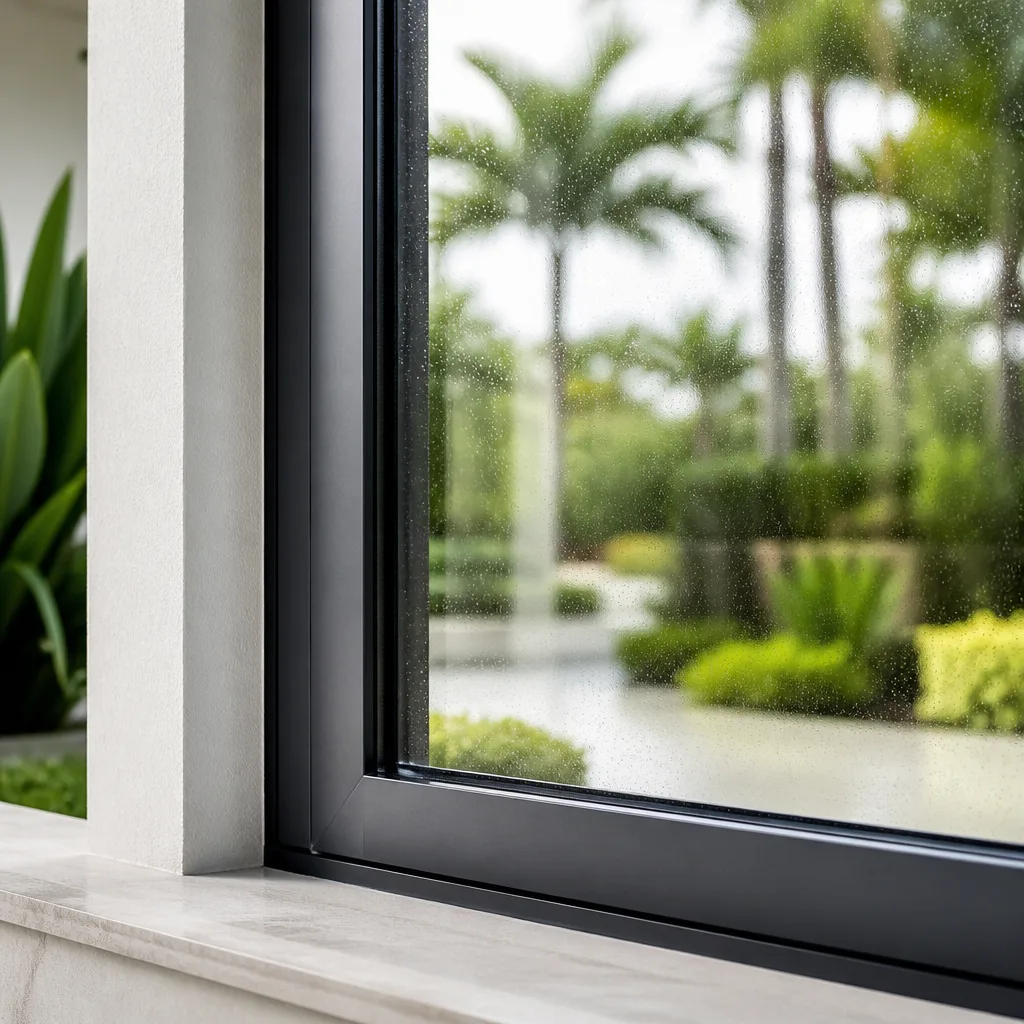
Boynton Beach sits between the Atlantic and the Intracoastal, and salt air is not a detail – it’s a design condition. Properties in Quantum Cove, the Boynton Beach Marina district, the waterfront sections of Las Ventanas, and anywhere east of the FEC rail corridor are in a salt-air exposure zone that shortens the service life of standard hardware by a measurable amount.
The practical implications for glass railing pricing in these areas:
- 316 marine-grade stainless steel is specified instead of 304 for all exposed hardware – spigots, base shoes, standoffs, top rail brackets. The price premium is real but so is the difference in service life. 304 stainless in a high-salt environment shows surface rust within 18 to 36 months.
- Aluminum components need a higher-grade powder coat or an anodized finish, not standard architectural-grade coating. This adds to the material cost but is the correct spec for the environment.
- Glass panel edges should be polished rather than seamed – polished edges resist chipping and don’t hold salt deposits the way a rough seam edge does.
- Sealant at the base shoe or channel interface needs to be a marine-rated silicone, not standard construction silicone. This is a small cost difference but a maintenance-significant one.
When Sightline scopes a project east of Federal Highway in Boynton Beach, these specs are standard in the written price – not presented as upgrades at the end of the job. Haven Clause 1 means no surprises: the written price before work starts is the price.
How to Save on Glass Railing Installation in Boynton Beach
There’s a difference between saving money and spending less money. Saving money means the railing still functions correctly in five years. Spending less money sometimes means replacing it in three.
That said, here are the places where a thoughtful decision genuinely reduces cost without compromising the installation:
- Choose semi-frameless over frameless if the view allows it. On a pool deck at ground level or a first-floor patio where the view isn’t the point, a semi-frameless post system delivers 80% of the aesthetic at 65% to 75% of the cost. The vertical posts are visible, but the open glass panels still read as clean and modern. Save the frameless premium for the elevation where the sightline actually matters.
- Simplify the run where possible. Every custom angle, corner return, and notched panel is a custom shop cut that adds cost. If your deck layout allows a small design modification that eliminates two custom cuts, that’s a real reduction in the glass fabrication budget. Your installer should flag these opportunities during the measured survey – at Sightline, we do.
- Do substrate work before the railing crew arrives. If you already know your deck framing needs blocking, having a carpenter address that before the railing installation begins is almost always cheaper than paying railing crew labor rates for carpentry work. Coordinate the sequence.
- Don’t skip the permit to save money. The permit fee in Boynton Beach for railing work is modest. Skipping it to avoid the cost exposes you to code violations, a failed home inspection, and a full removal-and-reinstallation scenario that costs multiples of what the permit would have. The math doesn’t work.
- Get a second opinion on any written estimate you already have. Sightline offers a free review of any competitor’s written quote – no charge, no pressure. Bring us the scope and the number, and we’ll tell you whether the spec is correct for your site and whether the price reflects the actual Boynton Beach market. Call (561) 421-3844 to schedule that conversation.
- Combine projects where the mobilization cost can be shared. If you’re also replacing windows or doors – or if a neighbor in a townhome community is doing a similar project – coordinating the timing can reduce per-project mobilization costs. Sightline has done this for multiple homes in the same HOA in Boynton Beach; it’s worth a call if the timing aligns.
What the Installation Process Looks Like at Sightline
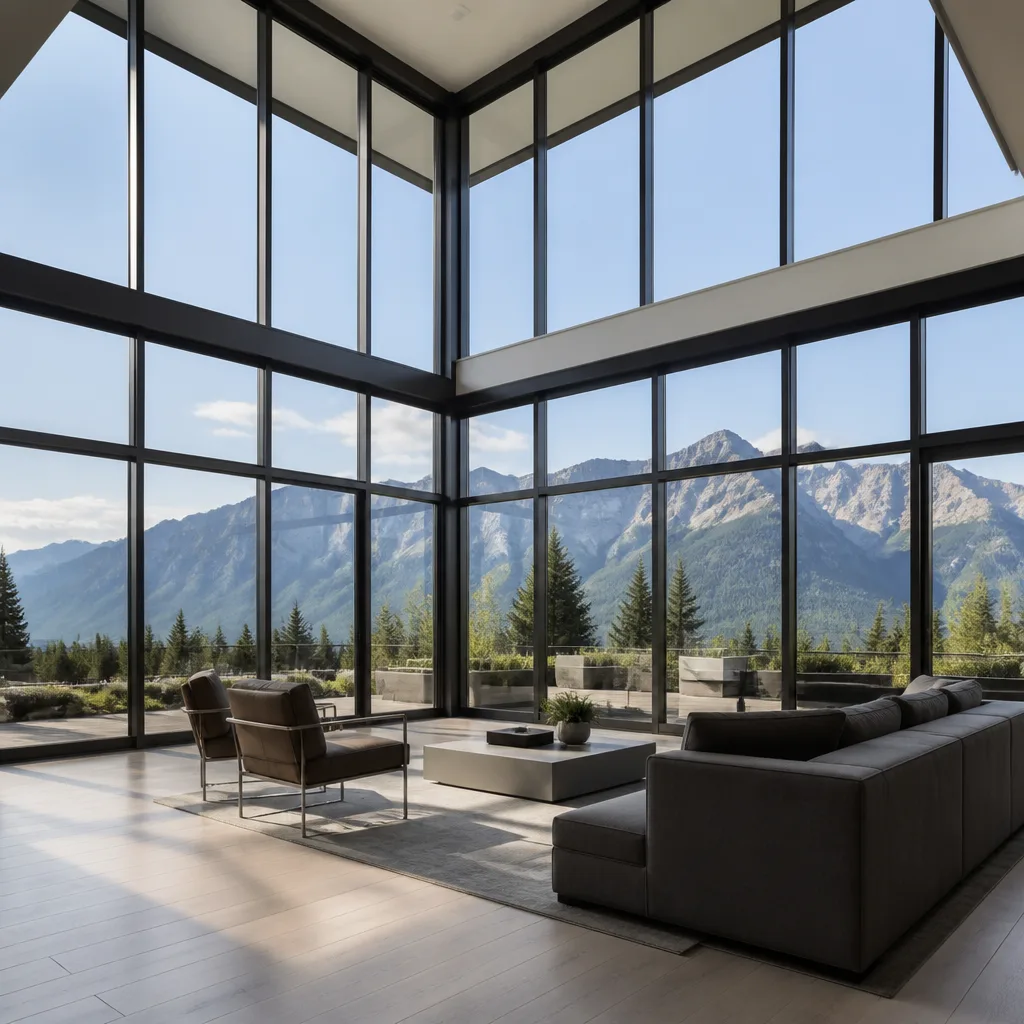
This section matters because the process is where the written price either holds or doesn’t. At Sightline, it holds – because the process is designed that way from the first visit.
The measured survey comes first. A Sightline technician visits the site, takes physical measurements of every run, documents the substrate type and condition, photographs the existing structure, and identifies any site conditions that affect the installation. That documentation – the measured survey you keep – becomes the written scope. The written scope is the price. There is no separate quote that shows up higher later.
Glass fabrication is ordered to the measured dimensions after the survey is reviewed and the written price is accepted. Tempered glass cannot be cut after tempering; custom-cut panels are fabricated to the survey measurements. This is why the measured survey matters – a panel ordered to the wrong dimension is a panel that can’t be used, and someone pays for that error. At Sightline, the error is ours to absorb, not yours.
Installation is carried out by background-checked, uniformed technicians identified by license number before arrival – Haven Clause 3 (Verified Crews). The photo record begins when the crew arrives and ends when the site is clean. You receive the documented photo record as part of the completed job record, not as a courtesy.
The 365-Day Done Right Promise covers every installation under the Haven Standard. If something isn’t right within 365 days of installation, Sightline makes it right. That’s written into the job record, not offered as a verbal assurance.
FAQs: Glass Railing Installation Cost in Boynton Beach
What does glass railing installation cost per linear foot in Boynton Beach in 2026?
Glass railing installation in Boynton Beach runs $150 to $400 per linear foot installed, depending on system type, glass spec, and hardware grade. Framed aluminum channel systems start around $150 to $210 per linear foot. Frameless base-shoe systems run $310 to $400 per linear foot. The coastal environment here – particularly for properties east of US-1 – adds cost because marine-grade hardware (316 stainless, higher-spec coatings) is the correct spec, not an optional upgrade. Call (561) 421-3844 for a written price based on your actual site – estimates are free and the measurement and the quote are the same document.
How much does a frameless glass pool fence cost in Boynton Beach?
A frameless glass pool fence in Boynton Beach – using a base-shoe channel or individual spigot system – typically costs $8,500 to $14,000 for a standard residential pool perimeter of 30 to 40 linear feet. That range includes the glass panels (usually 1/2-inch tempered for pool applications), marine-grade hardware, permit, and installation. Pool enclosures also have to meet Florida Building Code Section 454 barrier requirements, which specify gate hardware, panel spacing, and minimum height – your installer pulls the permit and ensures compliance, or you’re the one responsible at the next inspection. Call (561) 421-3844 and we’ll walk through the specific scope for your pool layout.
Is a permit required for glass railing installation in Boynton Beach?
Yes, a building permit is required for any guardrail installation in Boynton Beach where the adjacent drop exceeds 30 inches – which covers virtually all balcony, elevated deck, and staircase railing projects. The City of Boynton Beach permit fee for structural railing work typically runs $150 to $425 depending on declared project value. Sightline pulls the permit as part of the written scope; it’s documented in the measured survey, not added later. Any installer who suggests skipping the permit to save money is shifting that risk entirely to you – it shows up as a code violation on your property record and can require full removal at resale.
How long does glass railing installation take in Boynton Beach?
Most residential glass railing projects in Boynton Beach take one to three days of on-site installation once the glass panels are fabricated. The fabrication window – after the measured survey and before installation – is typically three to five weeks, because custom-cut tempered panels are made to order and cannot be rushed without compromising the spec. The full timeline from measured survey to completed installation is usually four to six weeks. Projects requiring structural substrate work or permits with longer review queues can run slightly longer; the measured survey will flag any conditions that affect scheduling.
Is it cheaper to repair or replace a glass railing panel in Boynton Beach?
A single panel replacement in an existing glass railing system in Boynton Beach typically costs $350 to $900 per panel, including fabrication and installation – more if the panel is custom-shaped or the system uses obsolete hardware that needs to be sourced or fabricated. If multiple panels are damaged, or if the hardware and mounting system is corroding (common on older coastal installations with 304 stainless or low-grade aluminum), a full replacement is usually the better economic decision because you’re not spending panel-replacement money on a system that will continue to corrode. Sightline’s measured survey documents the condition of existing hardware and gives you an honest assessment of whether repair or replacement is the right scope for the money.
What glass thickness is required for railings in Boynton Beach?
Florida Building Code requires a minimum of 3/8-inch (10mm) tempered glass for residential guardrail applications. Most Boynton Beach installations on elevated decks or pool enclosures use 1/2-inch (12mm) tempered glass for additional rigidity under dynamic load – Florida’s wind exposure adds lateral force on glass panels that 3/8-inch handles at code minimum but 1/2-inch handles with more margin. Laminated glass (two lites bonded with an interlayer) is specified when breakage containment is the priority – on high balconies or commercial applications, the panel holds together on impact rather than falling in pieces. The glass spec is documented in the written scope before fabrication begins.
Why Boynton Beach Homeowners Choose Sightline for Glass Railing Installation
The short answer: the price on the page is the price on the invoice. That’s rarer than it should be in the Boynton Beach market, where coastal project complexity creates a lot of opportunity for scope additions that weren’t in the original verbal quote.
Sightline Windows & Doors has documented more than 18,000 openings since 2012 – every one with a written price before work started and a photo record when it finished. Sonia Raman leads the team here in Boynton Beach, and the standard she operates under – the Haven Standard – means the measured survey you receive on day one is the same document as the final invoice. Haven Clause 1 (Have It In Writing) isn’t a marketing phrase; it’s how every job is scoped.
For glass railing projects specifically, that written discipline matters more than usual. Glass railing is one of the categories where “price creep” from substrate conditions, hardware upgrades, and permit requirements can push a $7,000 verbal quote to a $10,500 final invoice. At Sightline, the measured survey documents the substrate condition, the permit requirement, and the hardware spec before the price is written. What’s written is what’s charged.
Our Glass Railing Installation in Boynton Beach service page covers the full scope of what we install – frameless systems, semi-frameless systems, pool enclosures, staircase railings, and Intracoastal balcony perimeters. And from our home page, you can see the full range of what Sightline installs across windows, doors, and specialty glazing in South Florida.
Background-checked, uniformed technicians arrive identified by license number. The 365-Day Done Right Promise is written into every job record. And if you’ve already received a written estimate from another installer, bring it to us – we’ll review it at no charge and tell you whether the spec and the price are right for your site. That’s a free second opinion, offered because evidence travels with the claim at Sightline.
Key Takeaways: Glass Railing Cost in Boynton Beach (2026)
- Expect $150 to $400 per linear foot installed for most residential projects, with framed systems at the low end and frameless base-shoe systems at the high end.
- Most Boynton Beach projects total $3,500 to $14,000 depending on run length, system type, and site conditions.
- Properties east of US-1 and near the Intracoastal should specify 316 marine-grade stainless hardware – not optional in salt-air exposure zones.
- Permits are required for elevated railing projects in Boynton Beach; the fee runs $150 to $425 and skipping it creates code liability at resale.
- Glass fabrication lead time is three to five weeks; plan four to six weeks for the full project timeline.
- Written price before work starts, documented photo record when it’s done, and the 365-Day Done Right Promise on every Sightline installation – those aren’t promotions, they’re the operating standard.
Get a Written Price for Your Boynton Beach Glass Railing Project
If you’re ready to move from researching to knowing exactly what your glass railing project will cost, the next step is a measured survey. A Sightline technician comes to your Boynton Beach property, documents the site, takes physical measurements, and produces a written scope with the price on the page before anything is ordered or installed. The survey is yours to keep regardless of what you decide.
Call (561) 421-3844 to schedule your free measured survey. Live coverage, every day – not a voicemail queue, not a callback window. If you’d rather start with a question, call that same number and someone will answer it.
If you already have a written estimate from another installer, bring it. Sightline’s free second opinion is exactly that – a review of the spec and the number, at no charge, with no pressure. The offer stands because the Boynton Beach glass railing market has enough variability that an independent review of an existing quote is a useful thing, and we can provide it.
Written by Sonia Raman, Owner at Sightline Windows & Doors Boynton Beach, serving Boynton Beach since 2012. Pricing reflects the Boynton Beach market as of 2026. Sightline Windows & Doors Boynton Beach offers free estimates – call (561) 421-3844.
What Our Customers Say
"The survey measurements and the quote were the same piece of paper. Nothing changed on install day, which is not what happened with the two other companies we had out."
- Annette R."Patio door had dropped and would not lock. They adjusted it rather than selling me a new one, and charged accordingly."
- Simone T."Good crew, tidy install, finished a day early. Paperwork had the license number on it."
- Barry L.